

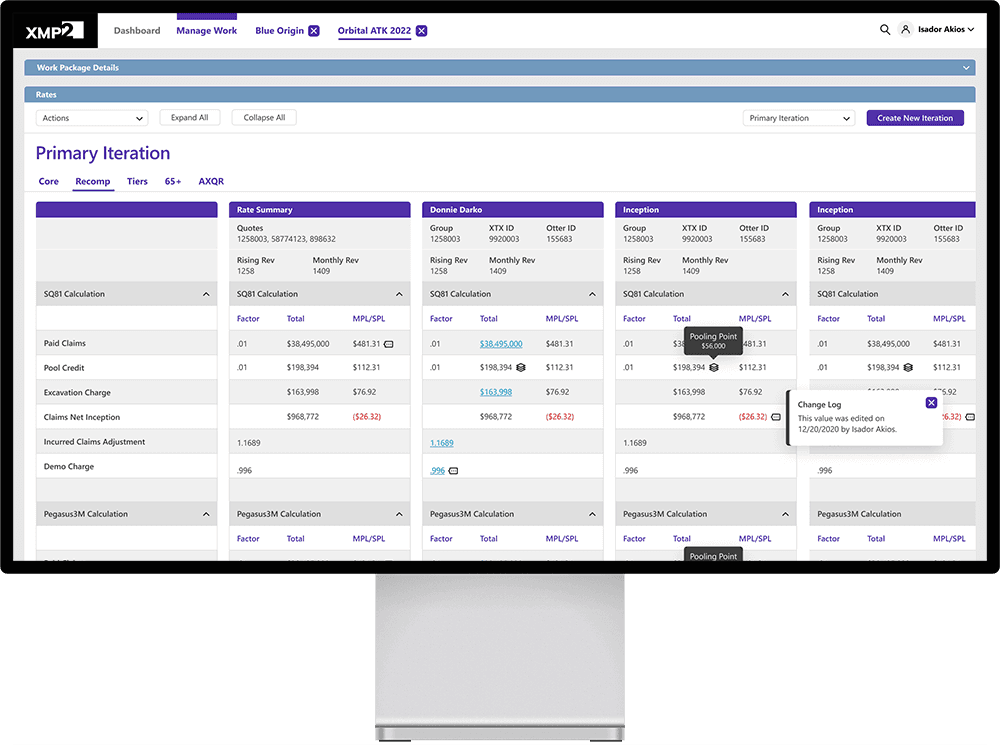
I was the senior product designer on a product design engagement for a healthcare insurance underwriting web application aimed at significantly improving the efficiency of multi-region quoting.
The business envisioned a new web app that would make the quoting process faster and more accurate. They wanted to combine the best parts of the old system with new improvements, making sure it's easy for users who were deeply familiar with the old platform to get on board. The main goal was to update the outdated workflow, making everything run smoother and the quotes more precise, saving the organization millions of dollars and dramatically improving the speed at which complex quotes could be delivered to existing and prospective customers.
The business envisioned a new web app that would make the quoting process faster and more accurate. They wanted to combine the best parts of the old system with new improvements, making sure it's easy for users who were deeply familiar with the old platform to get on board. The main goal was to update the outdated workflow, making everything run smoother and the quotes more precise, saving the organization millions of dollars and dramatically improving the speed at which complex quotes could be delivered to existing and prospective customers.

The project focused on multi-regional underwriters, adopting a phased approach to balance complexity and cost. Future expansion to include single-region underwriters was planned from the start, ensuring adaptability and scalability.
The scope of the project was to develop a desktop-only web application, tailored for users who needed to analyze large amounts of spreadsheet data. A significant constraint was the aging front-end technology stack, nearly fifteen years old, which limited the capabilities of the UI component library. Consequently, there were considerable challenges meeting the evolving demands of the business and building a modern, efficient user experience.
User Research
Ideation Facilitation
UI/UX Design
Design System
User Testing
Quality Assurance
Team Leadership
As an external consultant, I aimed to guide the organization towards a more experience-driven approach by introducing incremental, high-impact changes within their operating environment. My goal was to foster human-centered processes across the organization, ensuring the steps taken enhanced empathy and focused on human outcomes.
01
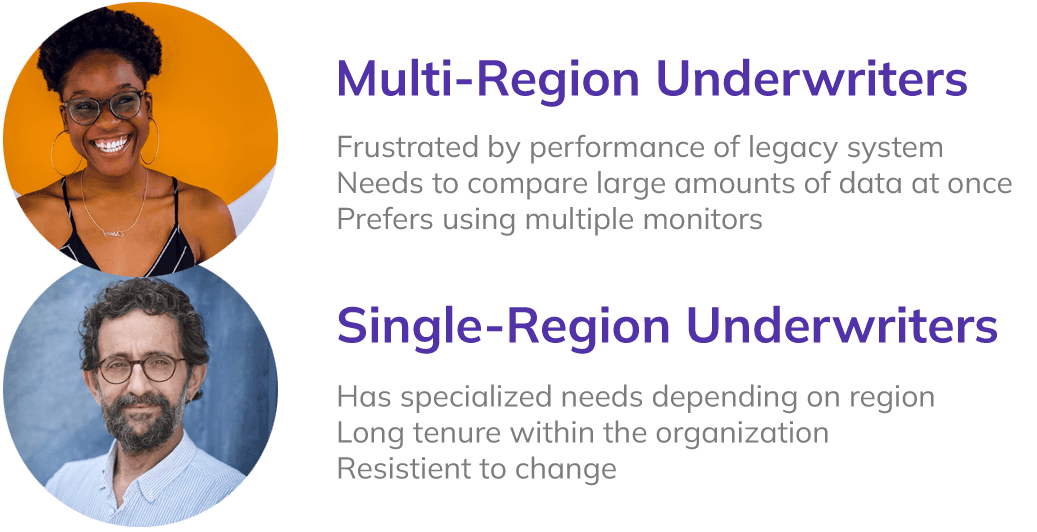
I interviewed roughly six muti-region and a handful of single-region underwriters to get a sense of their objectives, workflows, challenges, and daily tasks. This insight helped me create detailed user personas that were shared with the product, development, and leadership teams. It was interesting that the younger, multi-region underwriters were enthusiastic about transitioning to a new system, allowing us to start from an enviable position with users who were deeply invested in creating something better.
02
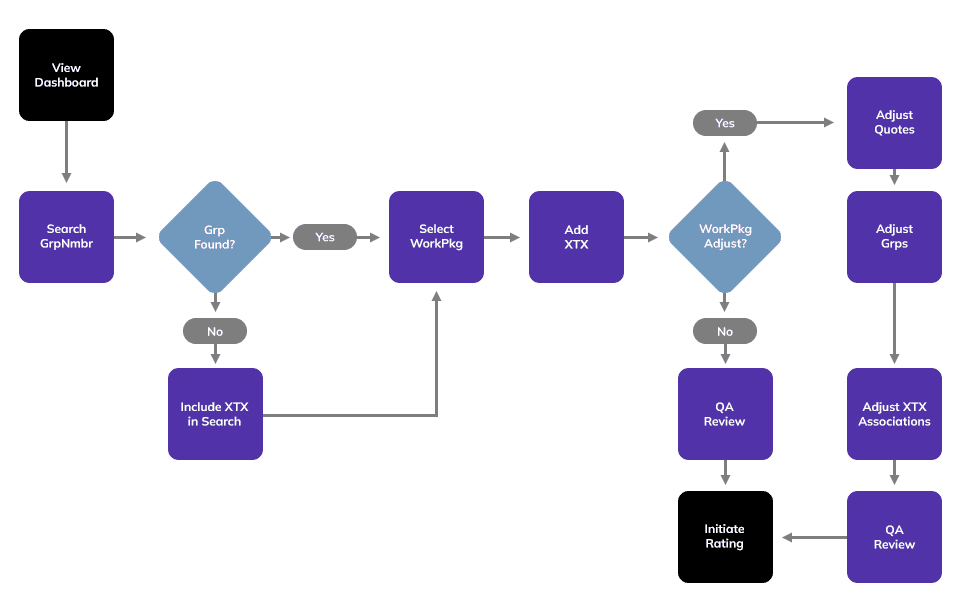
At the outset, I faced a challenge of outlining the app's architecture and feature set, which was wildly unclear. With little hope of rescue from the Product team, I began working with SMEs and users to understand current state and how it might evolve to become more reliable and efficient. It was through this collaborative process that we started producing our first sets of task flows, which began the faintest sketch of what this system would eventually evolve into. And although it was great to think abstractly about the steps needed to accomplish a task, the most intense work came after I began putting together coherent wireframes.
03
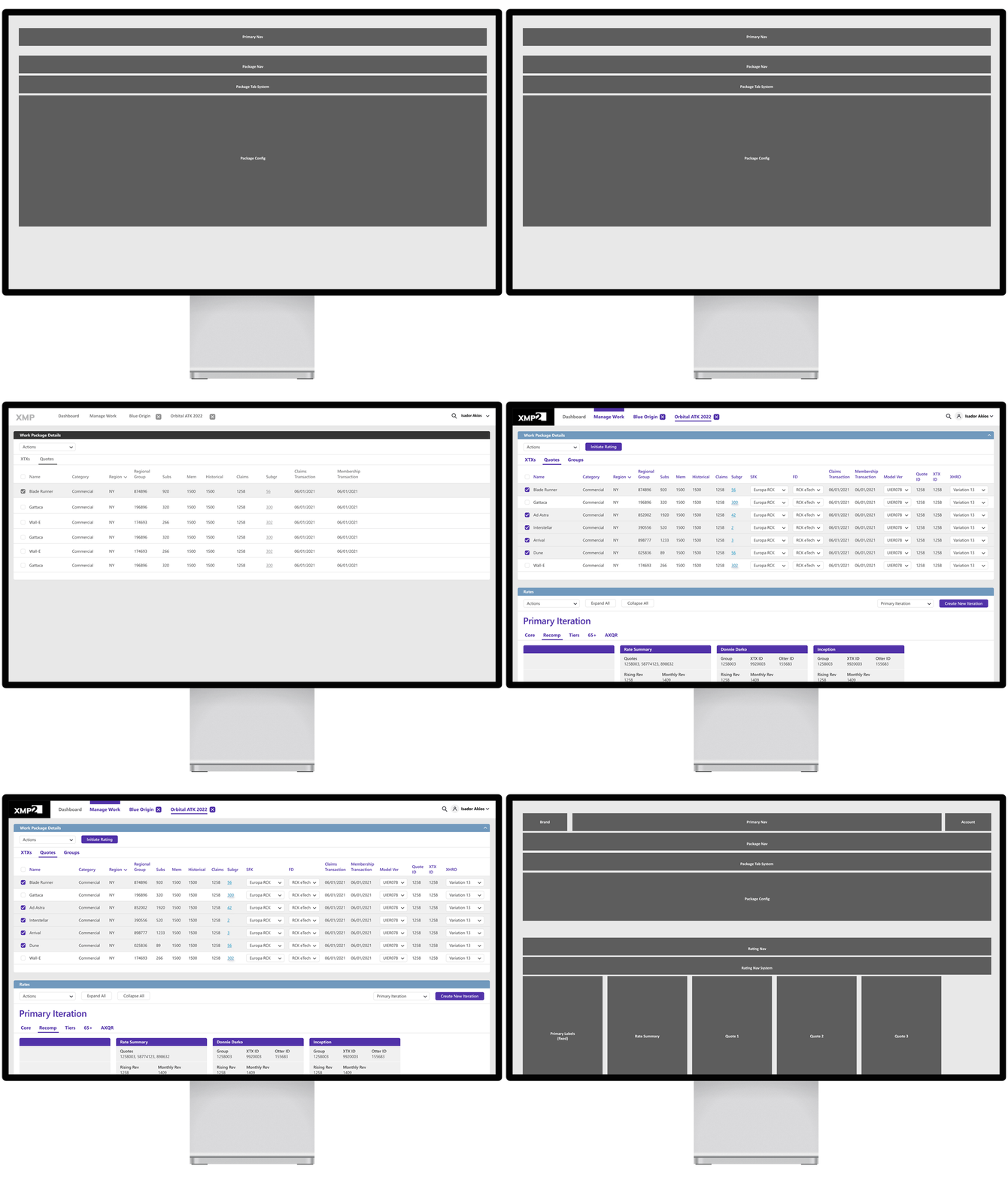
I started with low-fidelity wireframes, essentially greyboxing. With this I was able to outline the core features and user flows. I then began detail to the app to understand how users would make their way through various tasks and flows while ensuring components were available to support these interactions.
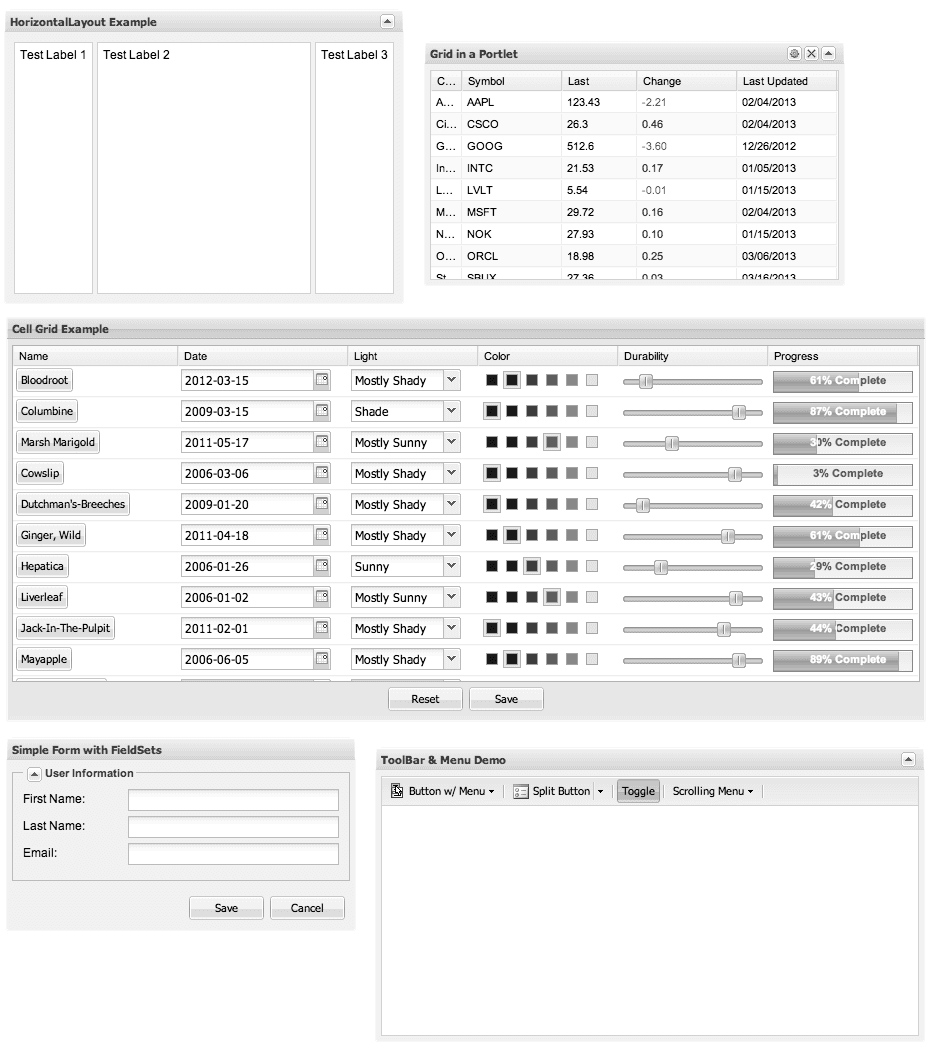
The UI library that was required to be used for this project had been wonderfully obsolete for fifteen years. Despite my efforts to move the client to a newer platform, the IT decision was to keep it. So I built a new skin for the library and worked with the development team to build it out.
Next I conducted collaborative design sessions with leadership, underwriting experts, and product and development teams—it was in many of these sessions where the most impactful decisions were made, and often I designed on the spot to gather real-time feedback.
A note about the design we eventually settled on: To address users' need for handling large amounts of data, we adapted the app's design to include spreadsheet-like features with locked columns, although to this day I wish we had had the time and resources to consider a radically different approach to the UI.
04
Designing an interactive prototype for a data-heavy system presented unique challenges, notably ensuring that data fields and calculations functioned effectively for user evaluation. To address this, I integrated dummy data and simulated flows into the prototypes. This approach helped users grasp the system's handling of data throughout various task flows during collaborative design sessions and into testing.

05
Often we weren't on track. Sometimes we were. I continued leveraging interactive prototypes in collaborative design sessions and usability reviews. This ongoing dialogue with users was instrumental in refining the system's usability and functionality.
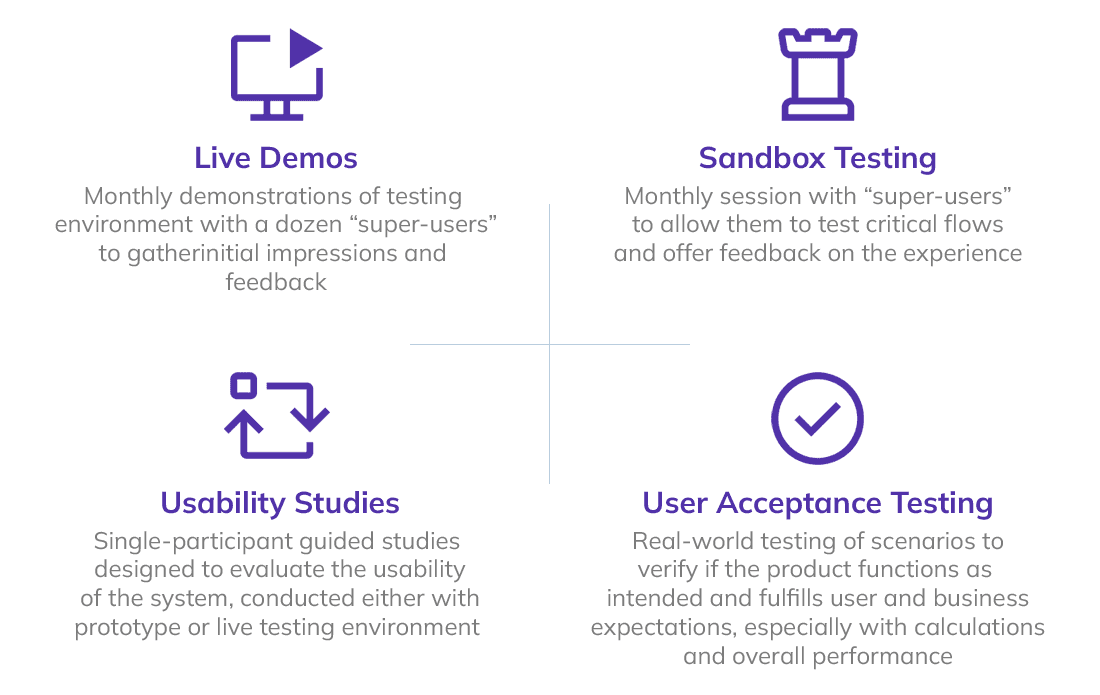
The testing strategy was thorough and multifaceted, ensuring the system was working hard for our users. We conducted live demos with our users, ran formal usability studies, provided sandboxes for users to tinker, and executed detailed UAT. Without this crucial testing, building a system as complex as this would have been an impossibility.
06
I actively engaged in the implementation phase, despite some hesitancy from IT. After all, they didn't want a UX designer coming in there writing visual defects at the end of the sprint, holding up acceptance. Without my presence, there'd be nobody to ensure design integrity and communicate the rationale behind each design decision. So I participated in backlog grooming, sprint planning, demos, and conducted UX quality assurance activities—ensuring the development team adhered to the agreed-upon specifications.
Recognizing the constraints of budget and timelines, compromises were inevitable. However, I prioritized interventions in areas where we could achieve the most significant impact with minimal effort, striking a balance between ideal design and practical implementation.
Following the product launch, there was an impressive 50% average improvement in the efficiency of multi-region quoting, significantly accelerating the delivery of both new and renewal quotes to customers. The launch also addressed a significant challenge for the multi-region underwriting team which was slowing them down, allowing them to allocate more time to their preferred tasks and less to the rigors of navigating outdated processes and systems.

The business envisioned a new web app that would make the quoting process faster and more accurate. They wanted to combine the best parts of the old system with new improvements, making sure it's easy for users who were deeply familiar with the old platform to get on board. The main goal was to update the outdated workflow, making everything run smoother and the quotes more precise, saving the organization millions of dollars and dramatically improving the speed at which complex quotes could be delivered to existing and prospective customers.