

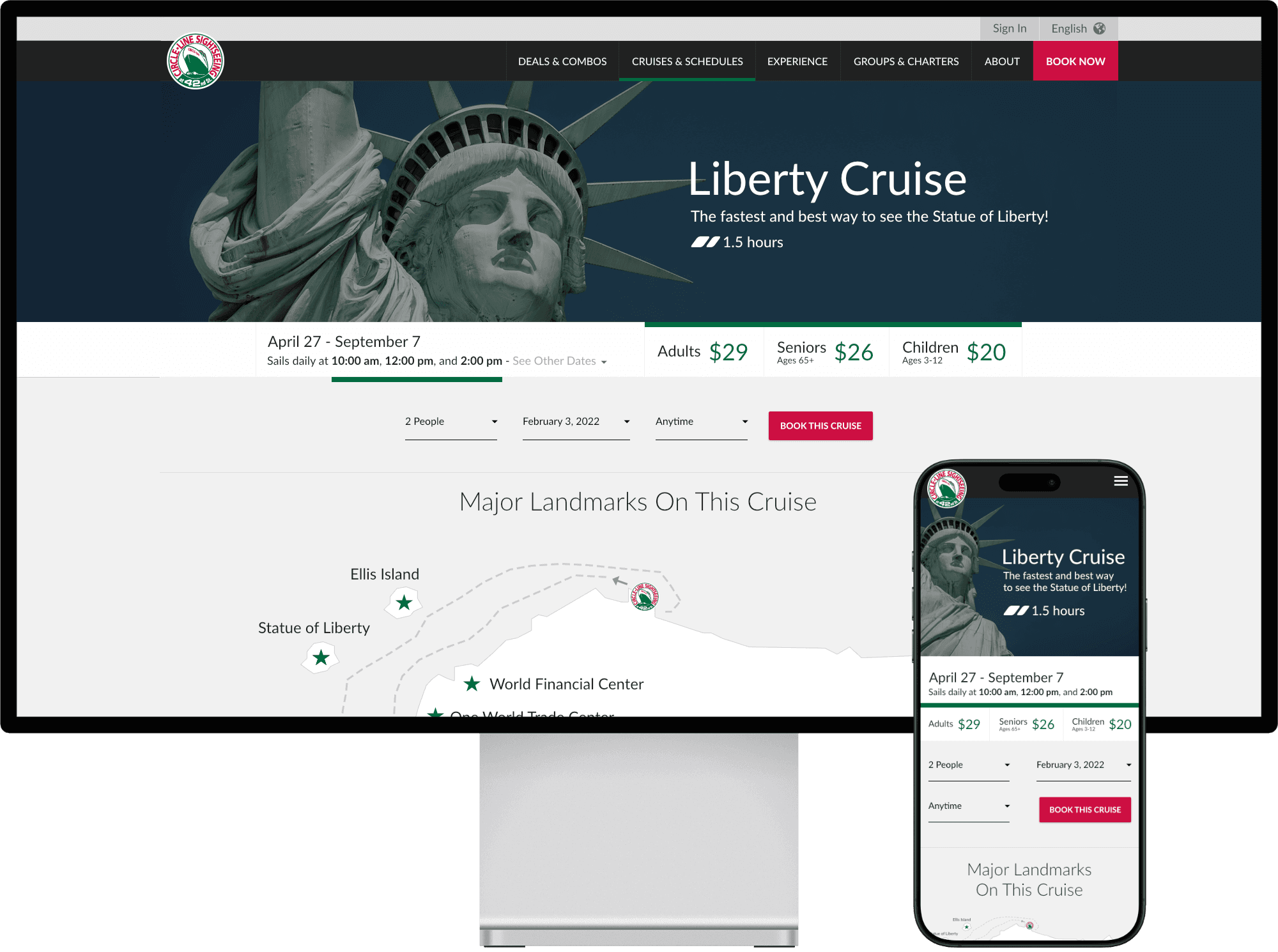
As a Senior Designer, I spearheaded a customer experience design initiative aimed at increasing ticket sales for Circle Line Sightseeing, a renowned boat-based sightseeing and entertainment company in Manhattan, New York. My contributions were part of a larger project which also included an internal process and technology review, with high level goals of increasing the customer base by 1.5x yearly, doubling cap on board sales, boosting unique website visitors by 1.2x, and doubling the overall number of website transactions over a period of three years.
Circle Line Sightseeing was facing increased competition, declining ticket sales, and rising costs—critical issues for tour operators and attractions that operate on razor-thin margins. Additionally, the online ticketing experience was not designed to be responsive, hindering mobile users from purchasing tickets easily.
The project was designed to focus on understanding and assessing the end-to-end customer journey, paying close attention to the online ticketing process, and offer suggestions for enhancing the overall experience.

The primary audience for the service design assessment and the associated UI work was the Circle Line executive team.
My scope was to understand the customer and their journey, evaluate the customer experience, and produce recommendations for improvement, especially in UI design.
CX Assessment
UI Design
To meet the project's tight deadline and budget, I prioritized activities that were essential or delivered the most value for the least effort.
01
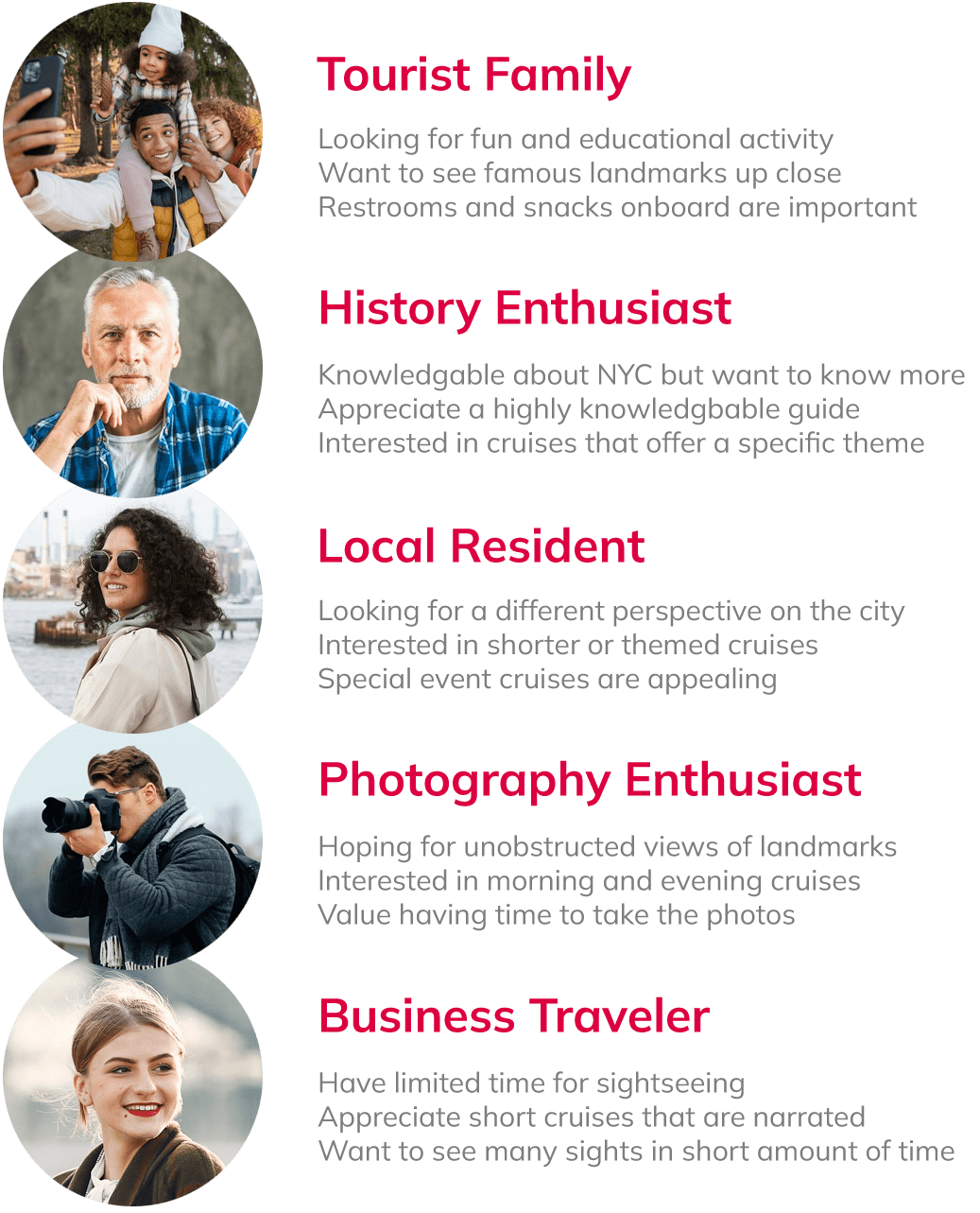
I began my research journey by interviewing business stakeholders to understand their perspective on customers. I was impressed by their deep knowledge and insights. Next, I gathered input from frontline employees, such as those managing ticket kiosks and assisting in the boarding or ticketing queue to gain their valuable perspectives. Following this, I conducted a dozen on-site customer interviews to gather data on demographics, goals, feelings, and behaviors. While I was considering how to organize the personas, I was struck by how diverse of a crowd that Circle Line attracted. People from all over the world in varying circumstances (e.g. limited knowledge of English, limited mobility) made accommodating everyone a genuine challenge.
02
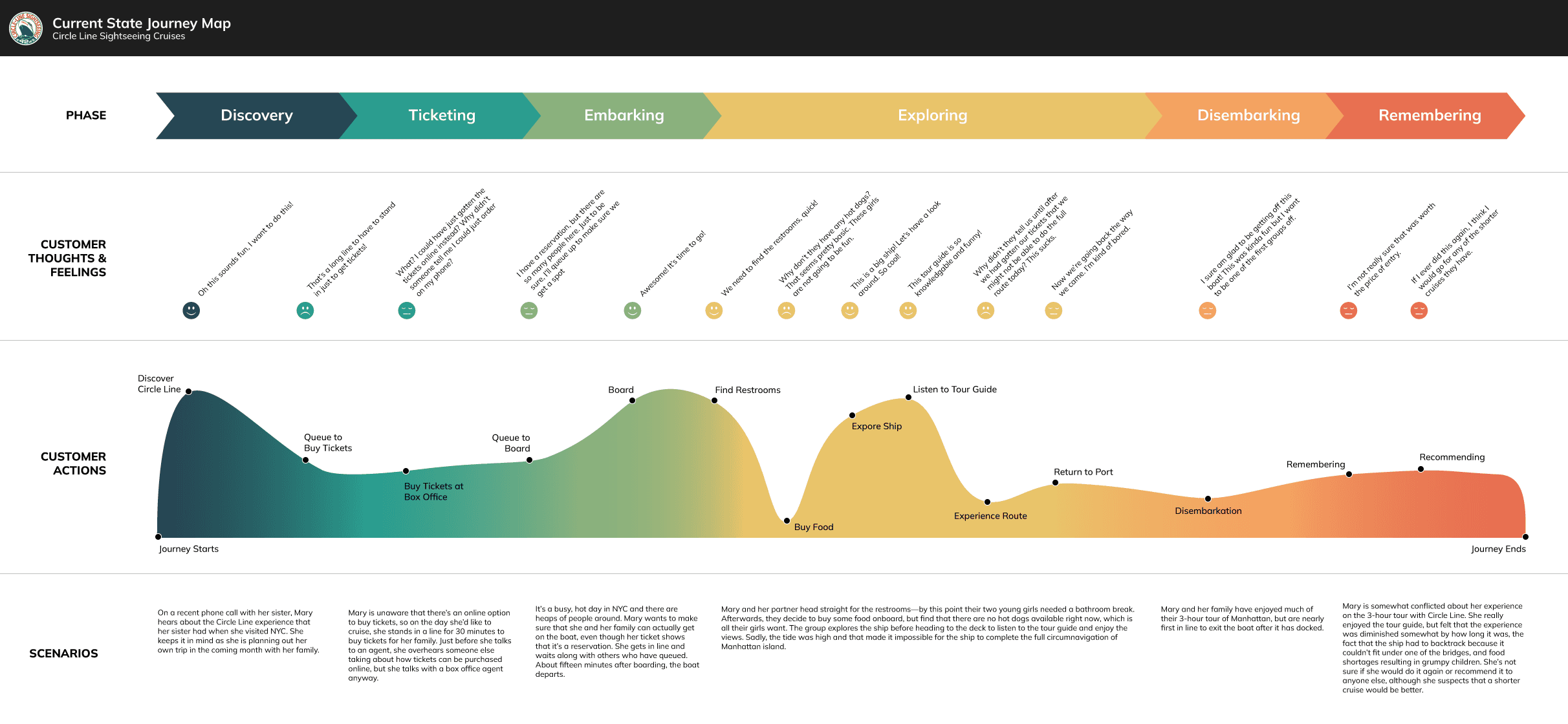
It was important to get a baseline for what the customer experience was like, from the discovery of Circle Line all the way through to post-cruise reflections. Business stakeholders again were deeply helpful in helping me understand the numerous avenues that customers take along this journey. Some customers book their tickets online, for a specific time and day. Others buy vouchers online to allow for flexibility. Many customers received vouchers as part of a larger travel package that they purchased. Some users decide to take cruises simply by walking past Circle Line's dock at Pier 83 and standing in line to buy a ticket for the next boat leaving. As a digital native, I was surprised by the myriad ways in which customers engage with Circle Line, often without using digital devices to book tickets. I created a current-state journey map with the information that I had and later updated it after I had completed my evaluation.
03
When it came time to assess the cruise experience myself, I opted for an on-site, non-digital approach. First, I consulted the hotel concierge, who recommended Circle Line for a 3-hour cruise around Manhattan and provided a brochure with various options.
I then proceeded to purchase a ticket, board the cruise, and immerse myself in the experience, taking detailed notes throughout. I observed everything from the sights to the onboard amenities, and engaged with fellow passengers to gather their thoughts and opinions. I asked if they would take this cruise again and if they would recommend it to others. I evaluated the food, purchasing opportunities, and the guide's attempts at humor and commentary.
Afterwards, I interviewed a half-dozen customers to gain a deeper understanding of what they enjoyed and what pain points they encountered. The results were not promising. Here's what I found:
Ticketing lines are far too long during the peak season.
Customers are not informed of tricky scenarios (e.g. issues with the tides which might prevent the completion of the cruise).
Box office is not flexible enough with ticketing.
Ships left the dock without restocking food supplies, resulting in shortages even on cruises running at 1/4 capacity
Overall the experience felt dated and many customers regretted taking the 3-hour cruise due to its length.
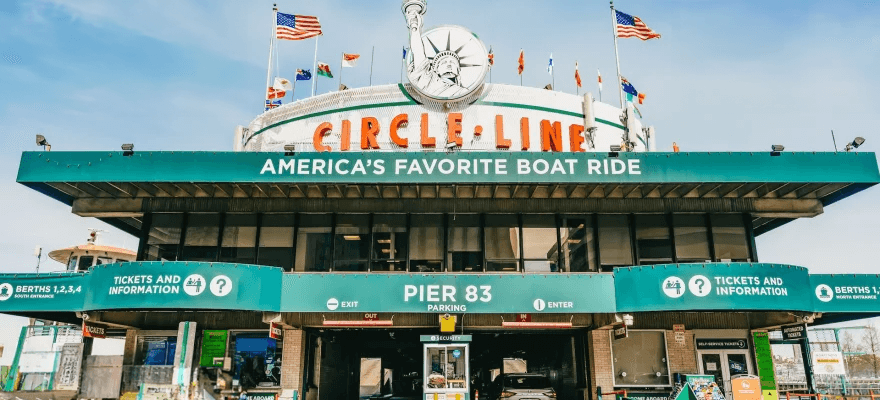
Box office and front entrance
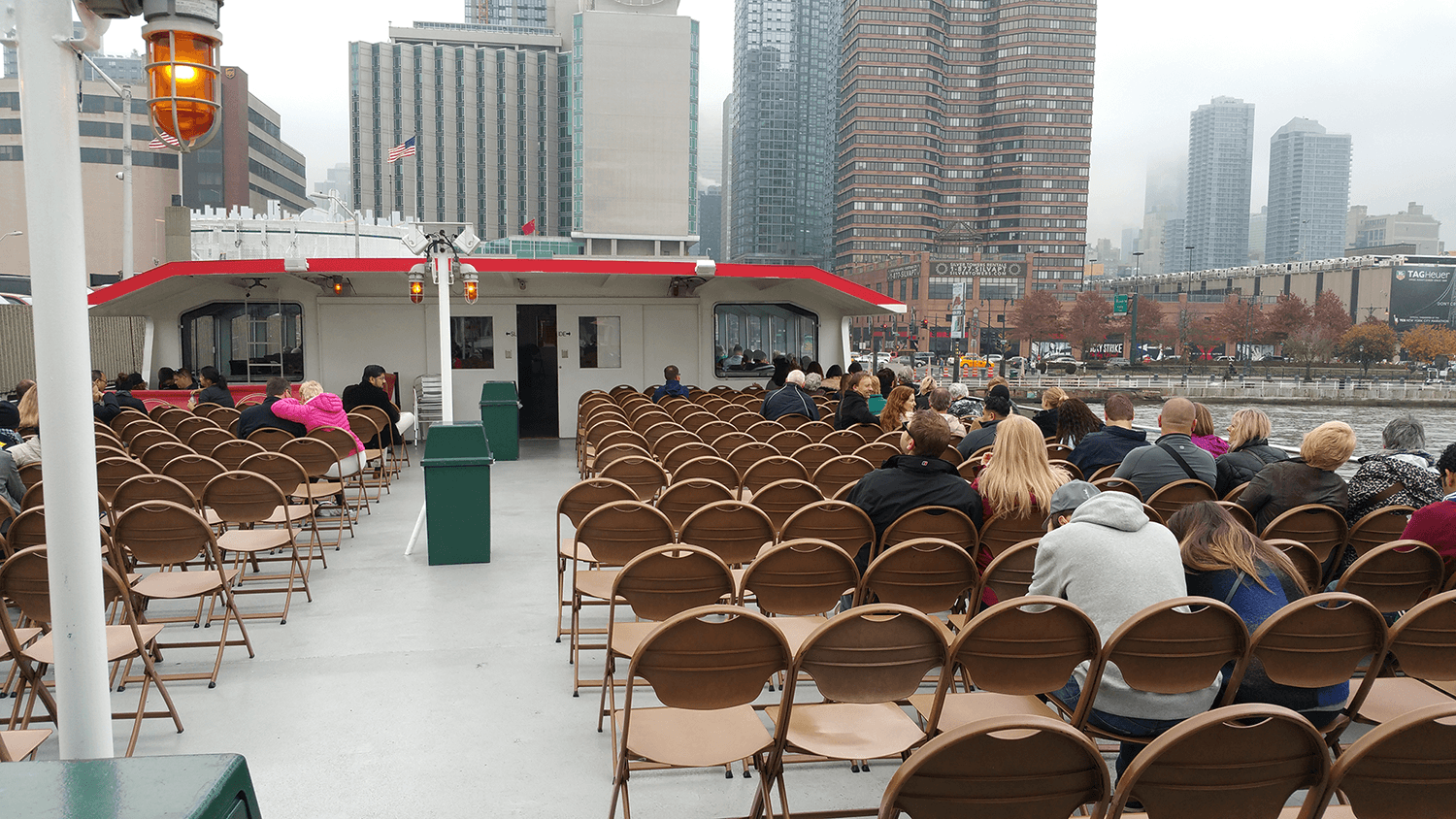
The body language of these customers suggested that they were bored of their 3-hour cruise. I was certainly ready to disembark.
04
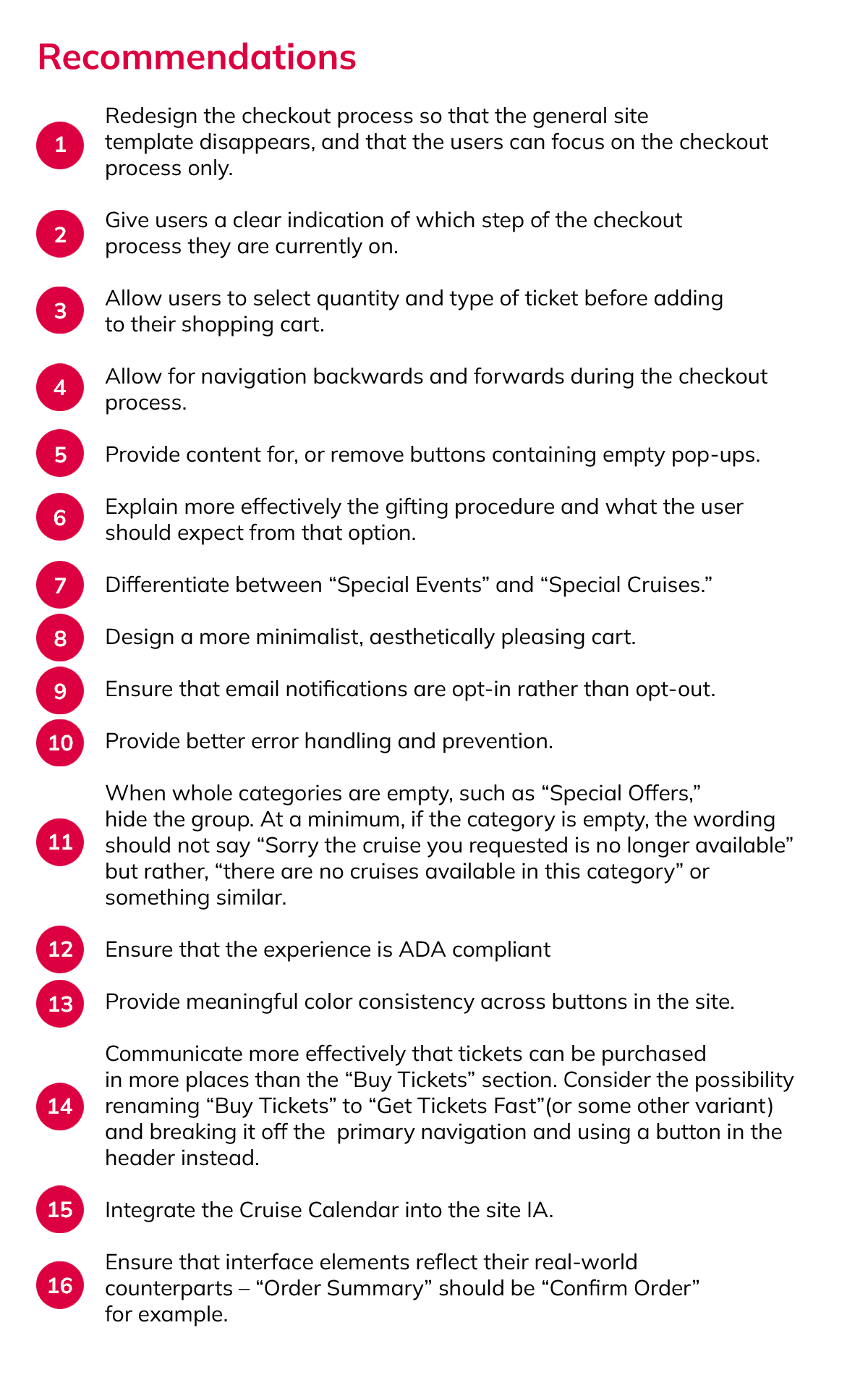
05
With only a few days remaining in the project, I put together a quick mockup of how we could update the experience to accommodate mobile users and simplify the online ticketing experience.
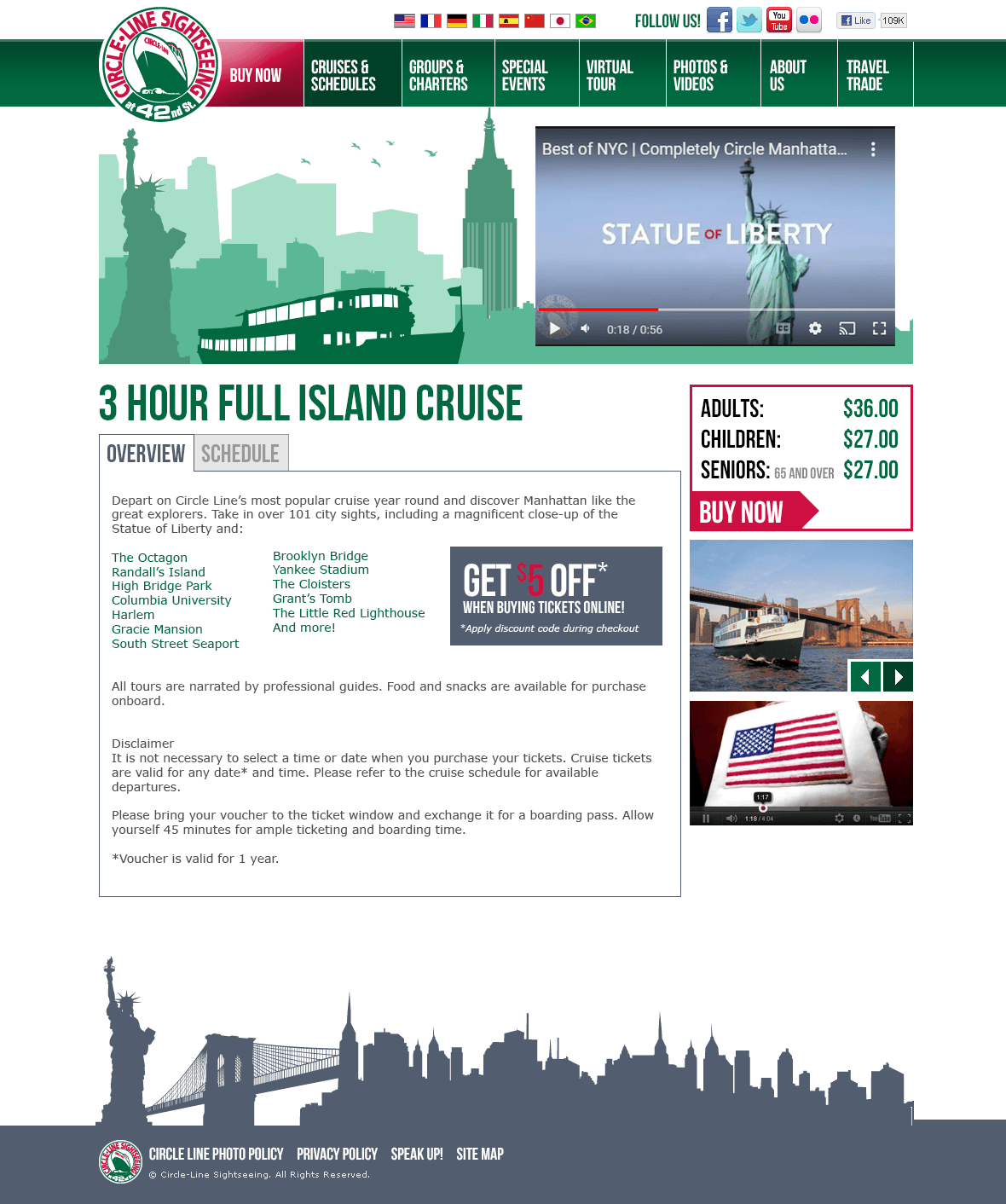
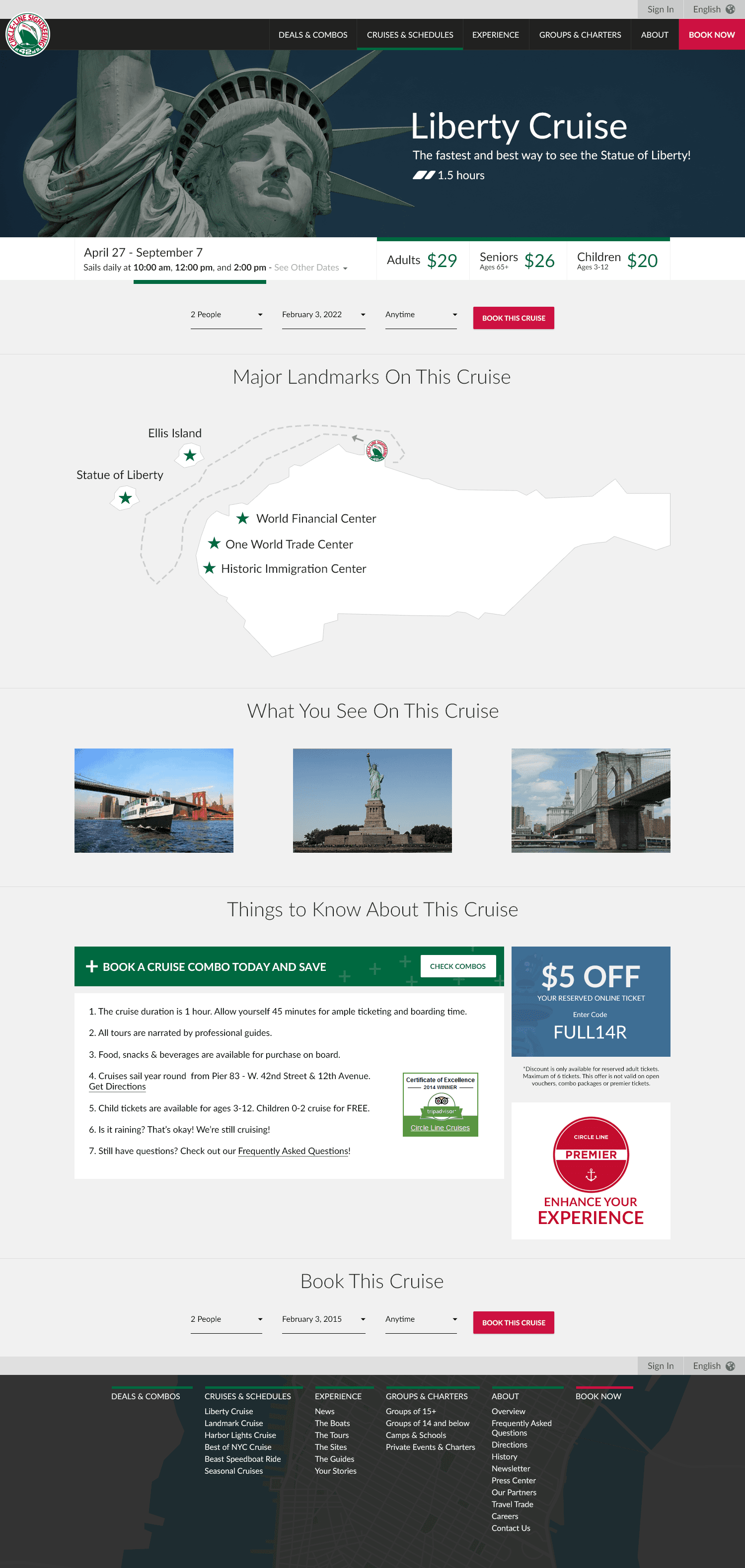
The assessment yielded valuable insights into areas ripe for improvement, particularly concerning the online presence and ticketing process. Moving forward, addressing the identified pain points while expanding the scope of evaluation could position Circle Line for enhanced customer experiences and allow them to match or beat their target growth metrics.